

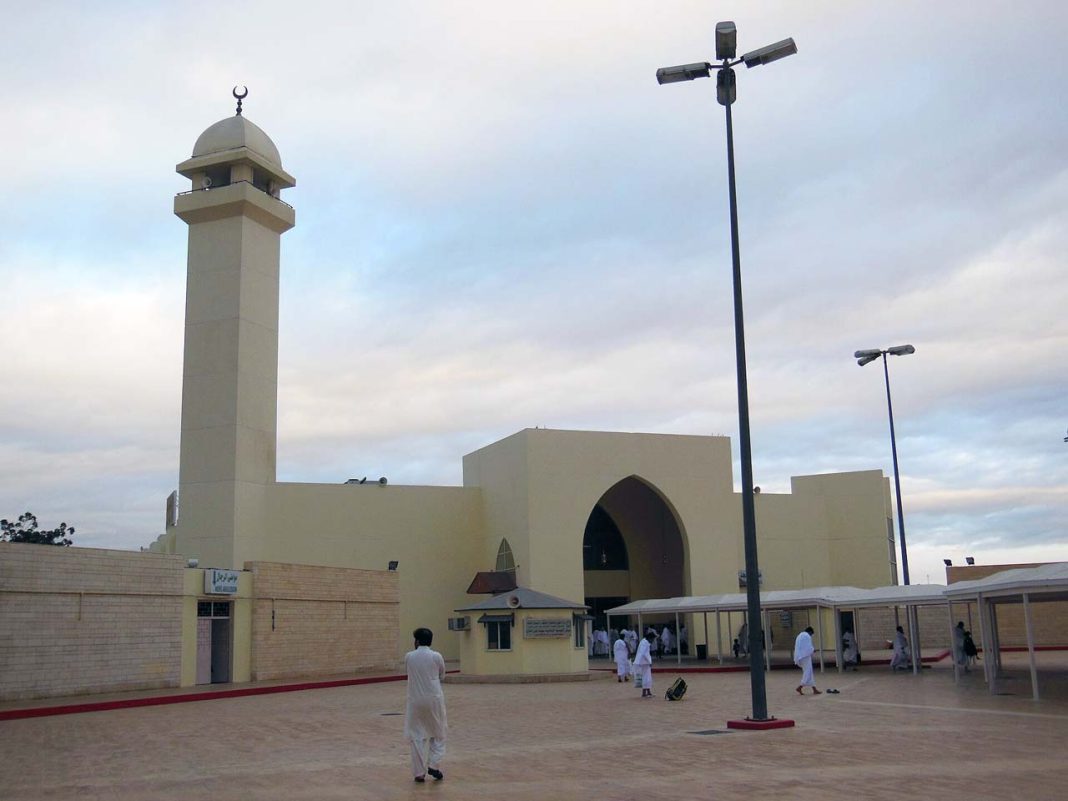

In the journey of a lifetime, Miqat Makani serves as the spiritual gateway to Makkah. It is the specific geographic boundary designated by Prophet Muhammad ﷺ where pilgrims must enter the state of Ihram—declaring their intention and wearing the sacred attire—before proceeding to the Holy City.
Passing these boundaries without Ihram is a violation of Sharia protocols, requiring a “Dam” (penalty sacrifice) to rectify the pilgrimage. Here is everything you need to know about these sacred points.
1. The Five Primary Miqat Points (Global Access)
The location of your Miqat is determined by the direction from which you approach Makkah:
Miqat Name |
Common Landmark |
Primary Route / Region |
Distance to Makkah |
| Dzul Hulaifah | Bir Ali | Pilgrims coming from Madinah. | ± 450 KM |
| Al-Juhfah | Near Rabigh | Pilgrims from Syria, Lebanon, Egypt, Europe, & North Africa. | ± 183 KM |
| Yalamlam | – | Pilgrims from Yemen, Southeast Asia (Indonesia, Malaysia), & India. | ± 92 KM |
| Qarnul Manazil | As-Sailul Kabir | Pilgrims from Najd (Riyadh) and the GCC/Gulf Countries. | ± 94 KM |
| Dzatu ‘Irq | – | Pilgrims |
2. Miqat for Air Travelers (The Jeddah Solution)
Modern aviation has introduced new practicalities for international pilgrims. If you are flying directly into King Abdulaziz International Airport (JED) in Jeddah:
- Direct Flights: For those flying from Southeast Asia, Europe, or America, the Miqat is often crossed mid-air (above Yalamlam or Qarnul Manazil). Most airlines announce when the aircraft is approaching the Miqat zone.
- The Jeddah Consensus: Many contemporary scholars and official fatwas (including those from Indonesia and Saudi authorities) recognize Jeddah Airport as a valid Miqat for those arriving by air.
- Pro-Tip: To avoid the difficulty of changing clothes in a cramped airplane lavatory, many pilgrims put on their Ihram garments at their departure airport or during a transit, then simply declare their intention (Niyyah) when the pilot announces the Miqat boundary.
3. Additional Miqat Points (For Sunnah Umrah within Makkah)
If you are already in Makkah and wish to perform a second or third Umrah (Sunnah Umrah), you must travel outside the “Haram” boundary to “Tanah Halal” to renew your Ihram. The most common points are:
- Tan’im (Masjid Aisha): The closest and most popular point, located just 7 KM from the Kaaba. It is easily accessible via taxi or local bus.
- Ji’ronah: Located 22 KM east of Makkah. This site holds great historical weight as the Prophet ﷺ entered Ihram here after the Battle of Hunayn.
- Hudaibiyah: Situated 26 KM from Makkah, this is the site of the famous Treaty of Hudaibiyah.
4. Rituals to Perform at the Miqat
To ensure your transition into the state of Ihram is valid, follow these steps at or before reaching the Miqat:
- Physical Purification: Perform Ghusl (ritual bath), trim nails, and groom hair.
- The Attire: Men must wear two unstitched white cloths; women wear modest clothing that covers the body except for the face and hands.
- The Prayer: If possible, perform two Rak’ahs of Sunnah prayer.
- The Declaration (Niyyah): Explicitly state your intention: “Labbayk Allahumma Umratan” (O Allah, here I am for Umrah).
- The Talbiyah: Begin reciting the Talbiyah loudly (for men) or softly (for women) until you reach the Kaaba.
Final Warning
Once you declare your intention at the Miqat, you are officially in a state of Ihram. From this moment, prohibitions such as using perfume, cutting hair, or engaging in marital intimacy apply until the completion of your Umrah (Tahallul).